PDF pages4 min read
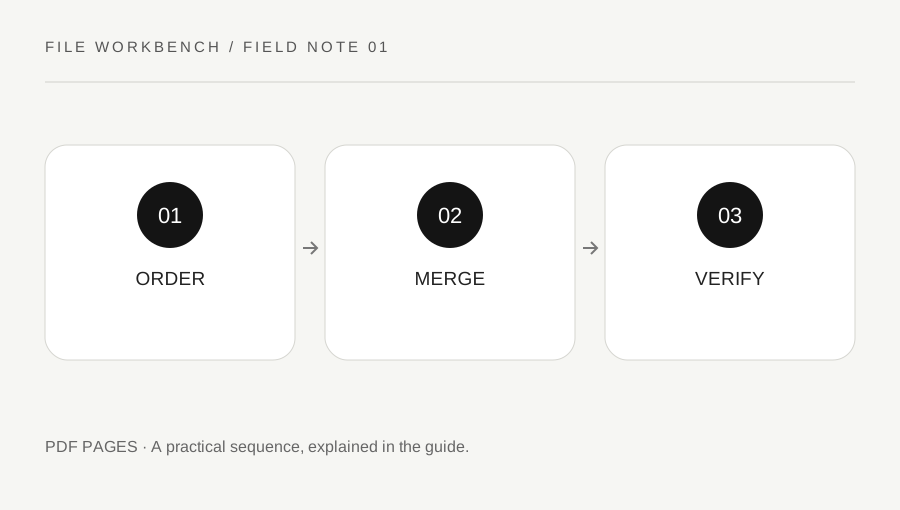
Combining PDFs is easy to start and easy to mischeck. Make the file order explicit, keep the originals and inspect the merged copy as a new document before sending it.
Read the complete guide ↗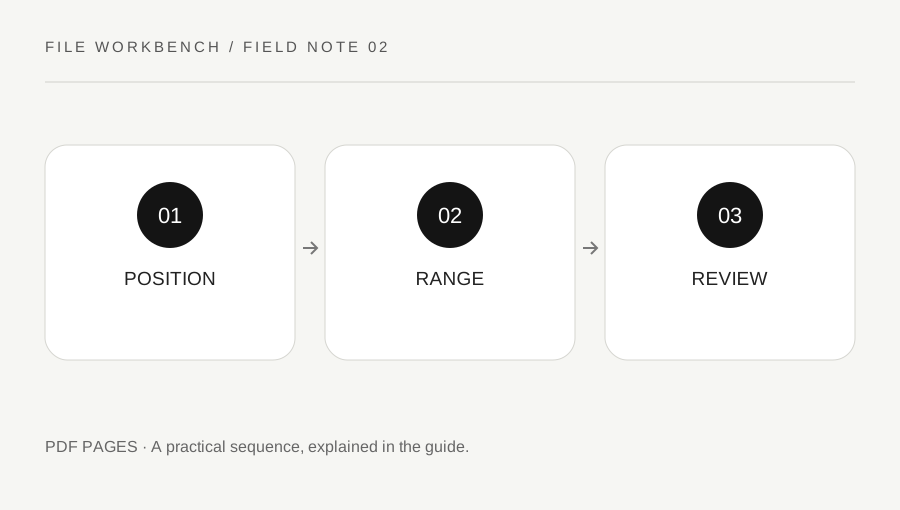
PDF pages4 min read
A report can label its first chapter page “1” even when that page is fifth in the PDF. Use the file positions shown in your viewer when selecting pages to extract.
Read the complete guide ↗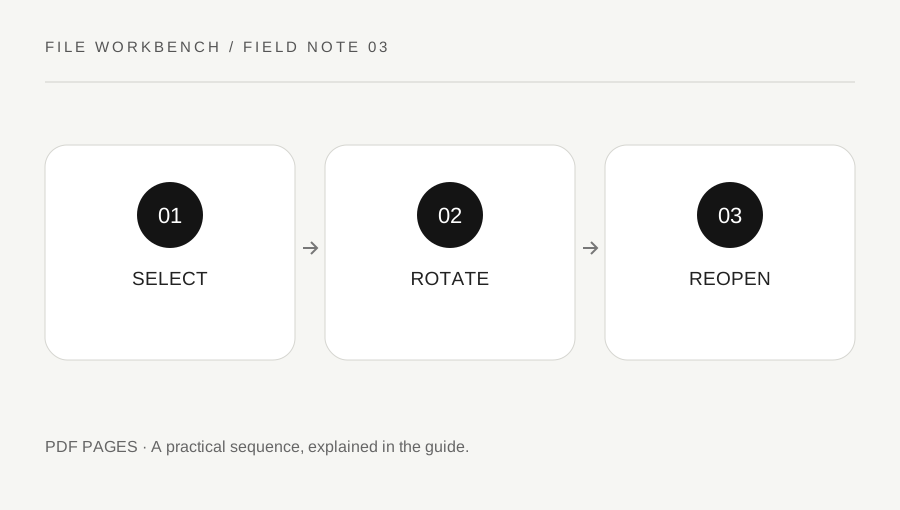
PDF pages4 min read
A sideways page can interrupt an otherwise readable document. Select the affected positions, apply a quarter turn and verify the downloaded copy outside the tool.
Read the complete guide ↗
Images4 min read
The best output format depends on the image and where it will be used. Compare readable detail, transparency, compatibility and file size instead of choosing by extension alone.
Read the complete guide ↗
Images4 min read
Pixel dimensions and file size measure different things. Keep the aspect ratio, set a sensible output box and inspect each exported version instead of repeatedly shrinking at random.
Read the complete guide ↗
Workflow4 min read
Local processing can avoid sending file contents to a conversion server, but privacy also depends on the device, browser and downloaded copies. Understand the workflow before selecting sensitive material.
Read the complete guide ↗
PDF pages3 min read
A page-selection list can create a new reading order as well as an excerpt. Make a map first, then review every transition so a rearranged file still makes sense.
Read the complete guide ↗
PDF pages3 min read
A merged file can legitimately contain portrait, landscape and differently sized pages. Review the intended reading and printing experience instead of assuming every page should be forced into one shape.
Read the complete guide ↗
Document boundaries3 min read
A PDF can contain signatures and form behavior beyond its visible page artwork. Keep the original and use the document owner’s required process before assembling or changing pages.
Read the complete guide ↗
Document boundaries3 min read
A PDF that looks orderly can still be difficult to navigate with assistive technology. If accessibility matters, preserve the authoring source and review the final file through an appropriate workflow.
Read the complete guide ↗
Document boundaries3 min read
A scan-heavy PDF can contain large page images even when it has few pages. Identify the destination requirement and preserve legibility before choosing a reduction workflow.
Read the complete guide ↗
Workflow3 min read
The wrong version can be more damaging than a failed conversion. Use a clear source-to-output routine and verify the actual attachment before sending a processed document.
Read the complete guide ↗
Document boundaries4 min read
A failed load can reflect encryption, unsupported content, damage or a browser limit. Keep the original and use an authorized source instead of treating every failure as something to circumvent.
Read the complete guide ↗
Images3 min read
A transparent background is part of an image’s behavior, not just its appearance in one viewer. Check the destination and inspect edges before choosing a solid-background export.
Read the complete guide ↗
Images3 min read
A maximum-size box preserves the whole image, while a crop changes what remains visible. Choose the operation that matches the destination instead of treating every dimension mismatch as an export error.
Read the complete guide ↗
Images3 min read
A screenshot can become small enough to upload and too small to understand. Check the text at its intended display size, remove unnecessary content appropriately and compare saved copies.
Read the complete guide ↗
Images3 min read
A filename helps software guess a type, but it does not rewrite the encoded image. Use a real export and check the actual saved output when a destination requires JPEG, PNG or WebP.
Read the complete guide ↗
Workflow3 min read
A file-size number is useful only with its unit and definition. Check the exact destination limit and the actual saved bytes rather than assuming two displays use identical conventions.
Read the complete guide ↗
Workflow3 min read
A one-file workbench can still support a small organized set. Use a shared specification, keep originals and check each output rather than assuming one good result validates the rest.
Read the complete guide ↗
Images3 min read
A website image should be clear at its intended display size without carrying unnecessary data. Start with the real layout requirement, create a suitable copy and review it in context.
Read the complete guide ↗